Launch offer — valid today only

📄 Digital book in PDF · read it on your phone or print it

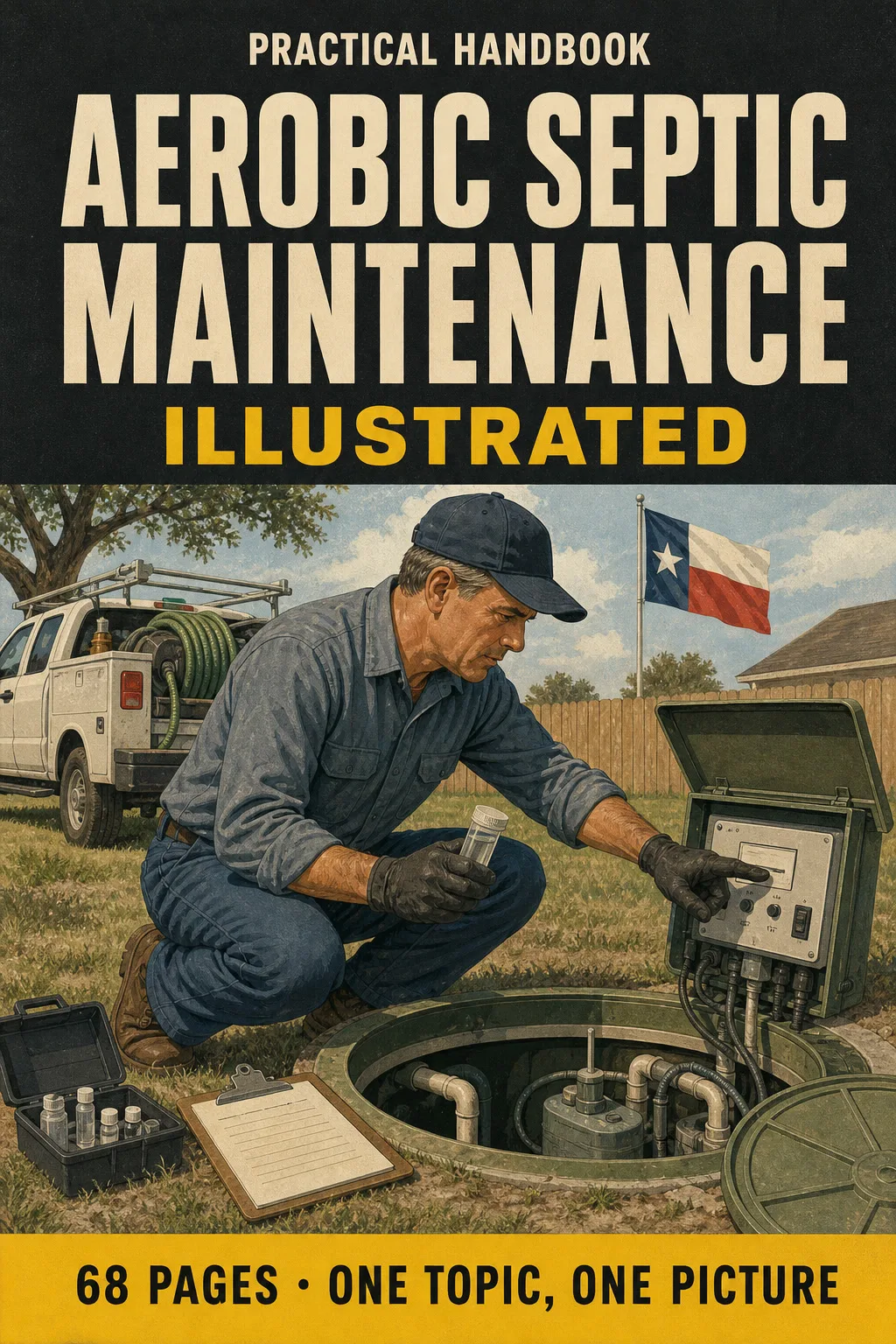
Aerobic Septic Maintenance and the Texas OSSF Exam in Drawings One Topic on Every Page

See the aerobic unit as one path and run every service visit in 10 steps, in the same order. Trash tank, aeration chamber, clarifier, pump tank and floats, chlorinator, spray and drip fields, troubleshooting: each topic on its own page, the drawing first, then what to remember. 68 illustrated pages.

START STUDYING THIS WAY

🔒 Secure checkout · PDF by email · 30-day guarantee

Every topic, its own pageEvery part and every visit step drawn, with the explanation right beside it
68 illustrated pages9 parts, from the TCEQ license to your exam-day study plan
Up-to-date sourcesTCEQ, 30 TAC Chapter 285 and 30 TAC Chapter 30
PDF by emailFormat

Look Inside the Book

Every page has one big drawing and a box with the steps and numbers you need to know:

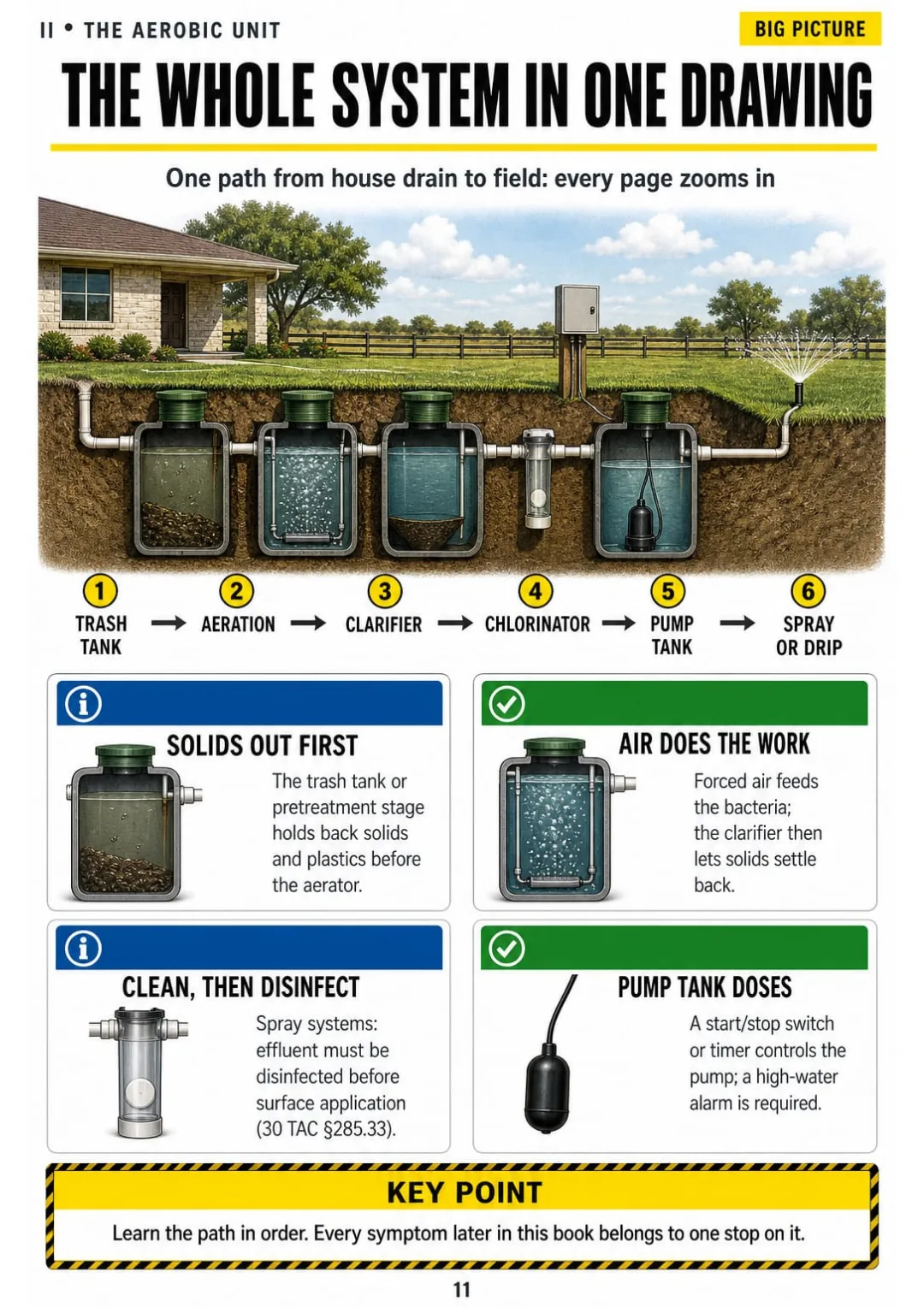
Trash tank → aeration → clarifier → chlorinator → pump tank → spray or drip, in one drawing
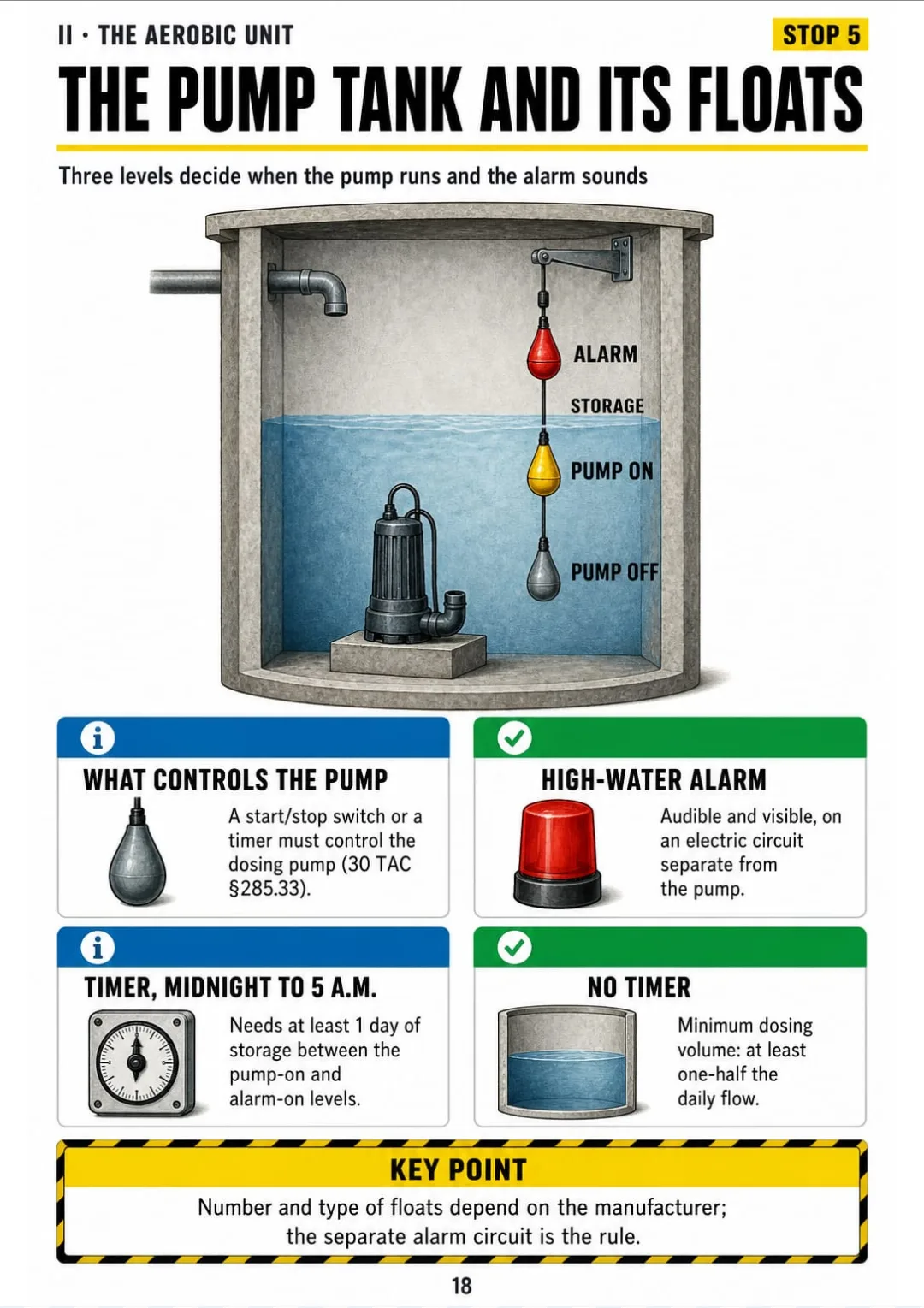
Pump off, pump on, alarm: timer systems need at least 1 day of storage
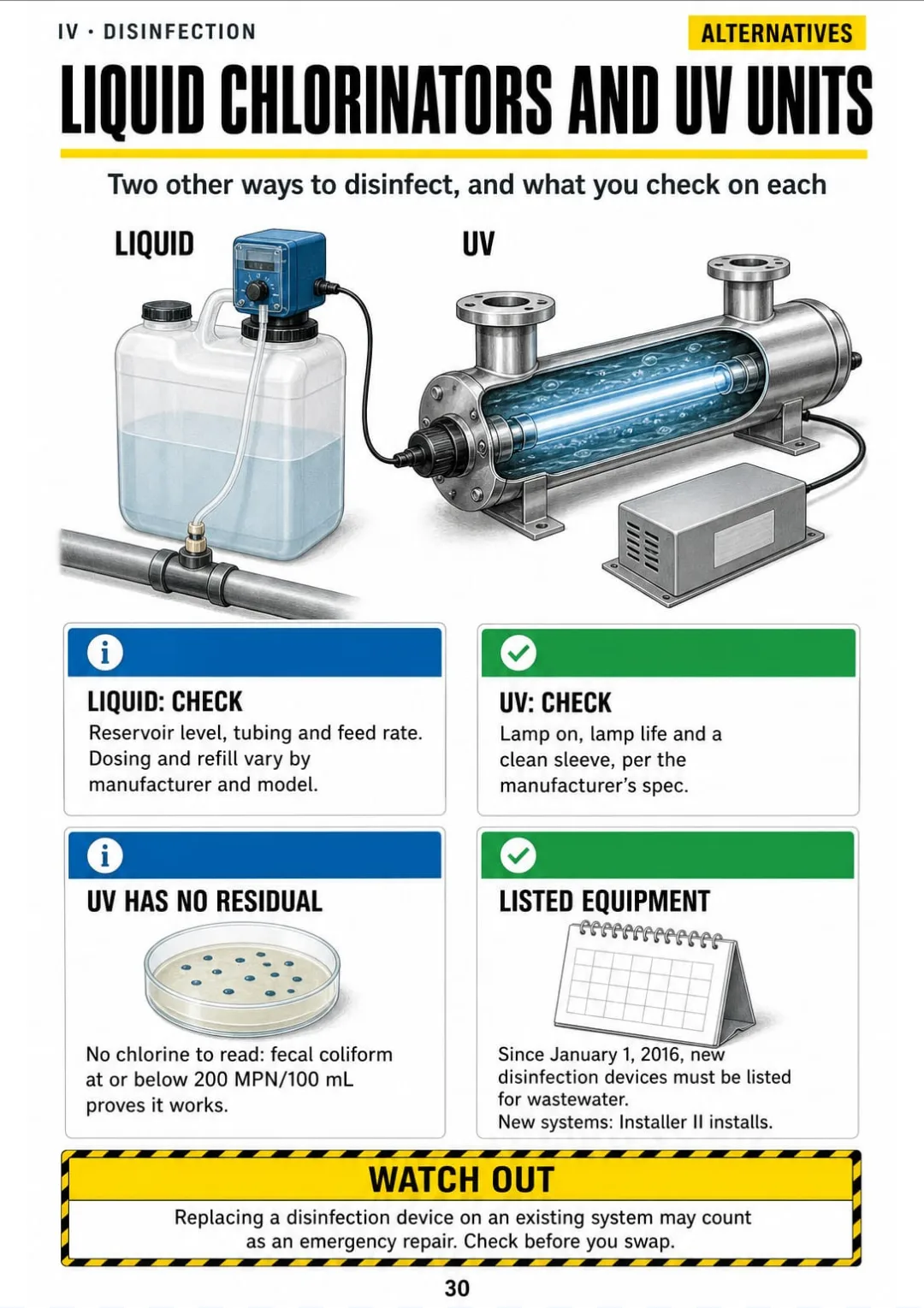
Liquid: feed rate and reservoir. UV: lamp and clean sleeve. Listed devices since 2016.
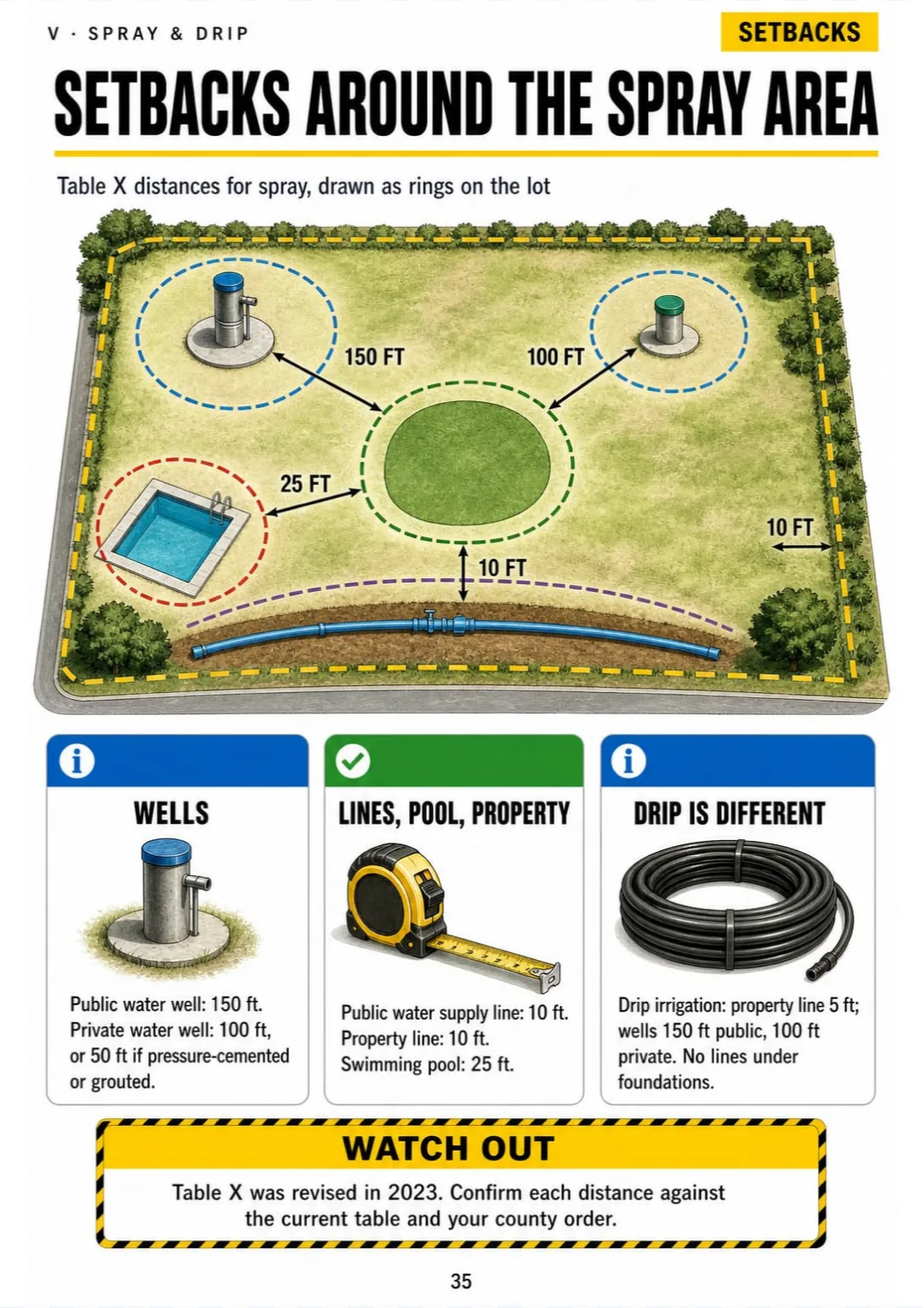
Spray setbacks (Table X): public well 150 ft, private well 100 ft, pool 25 ft, property line 10 ft
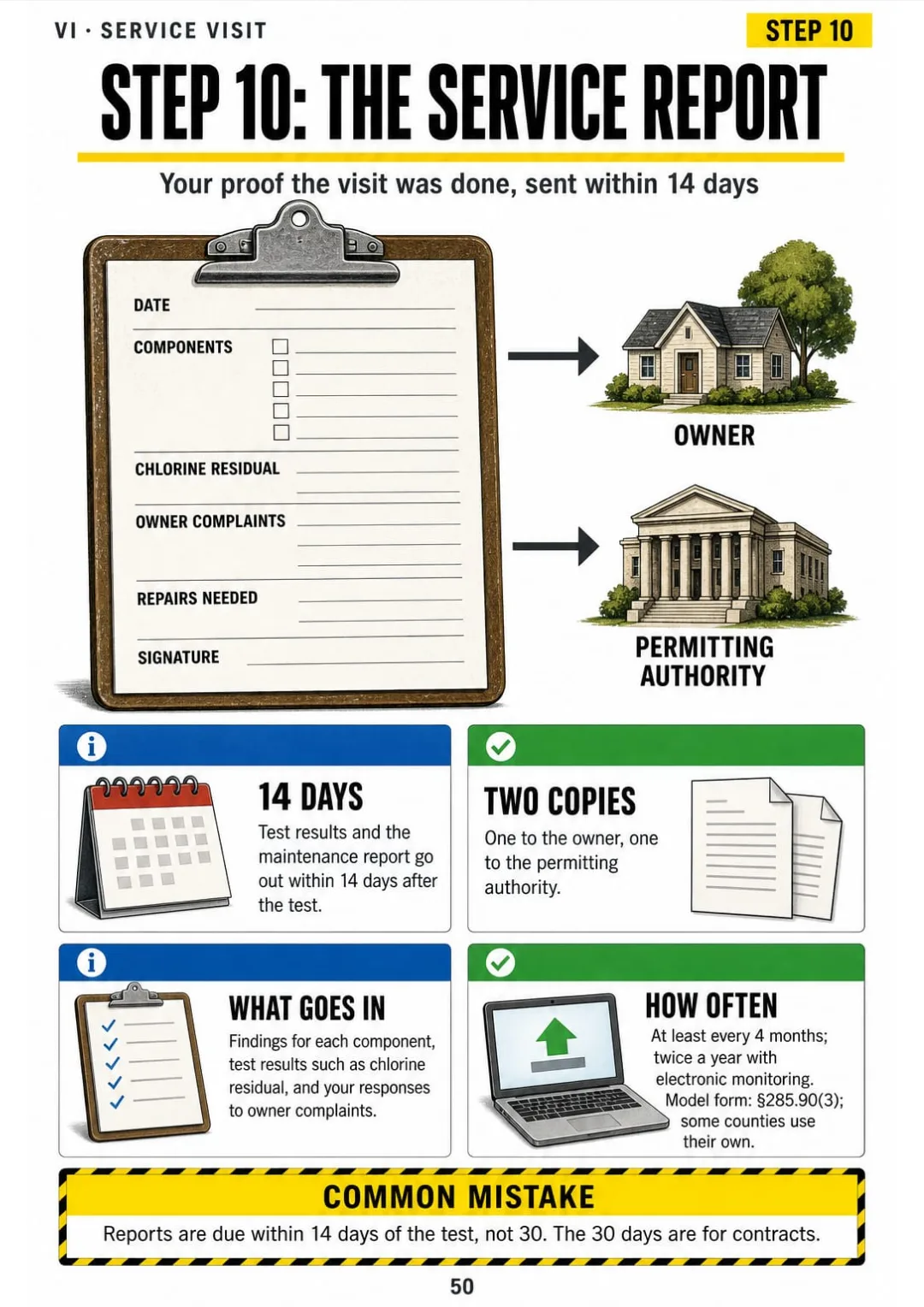
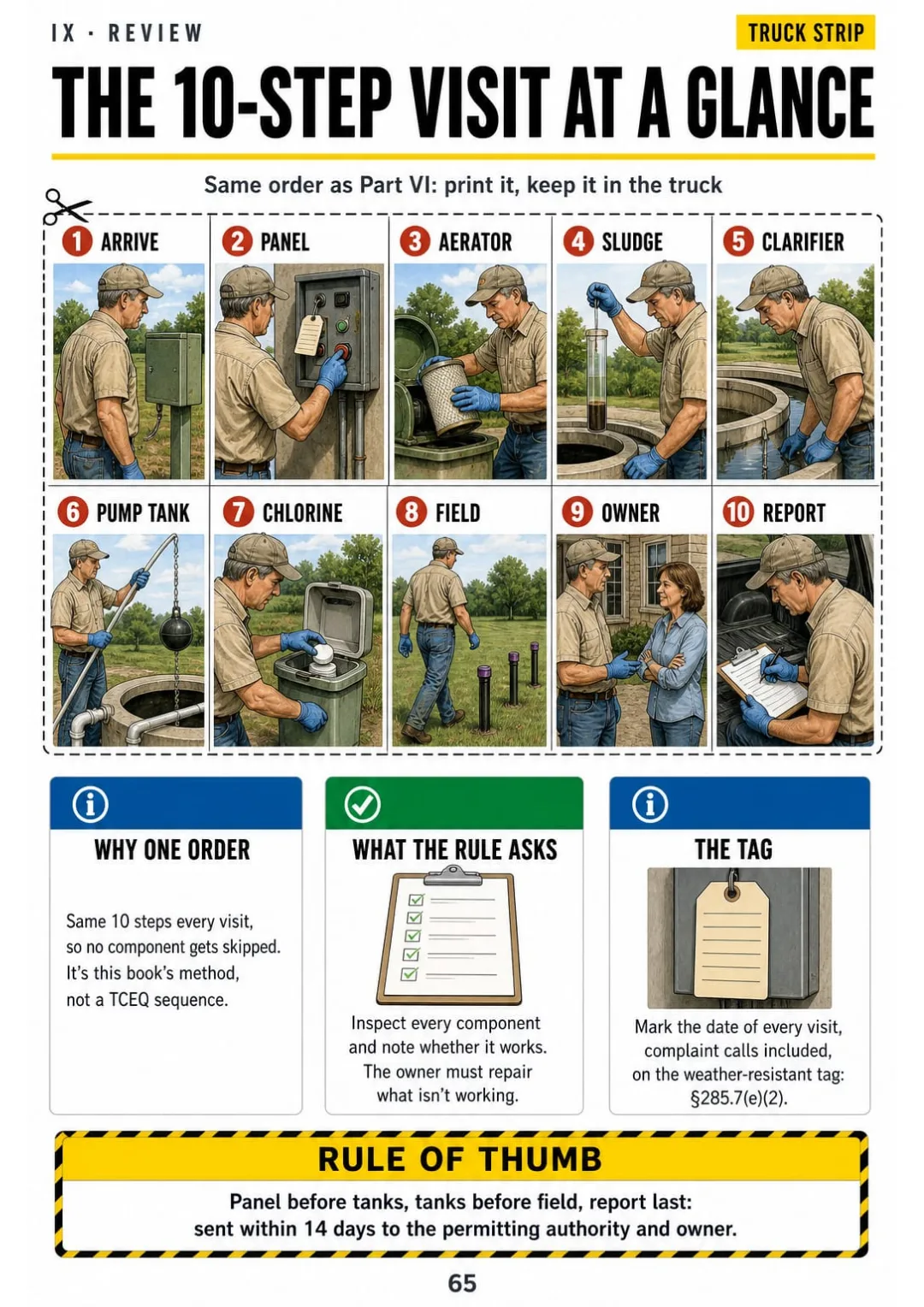
Step 10: report to the owner and the permitting authority within 14 days of the test.
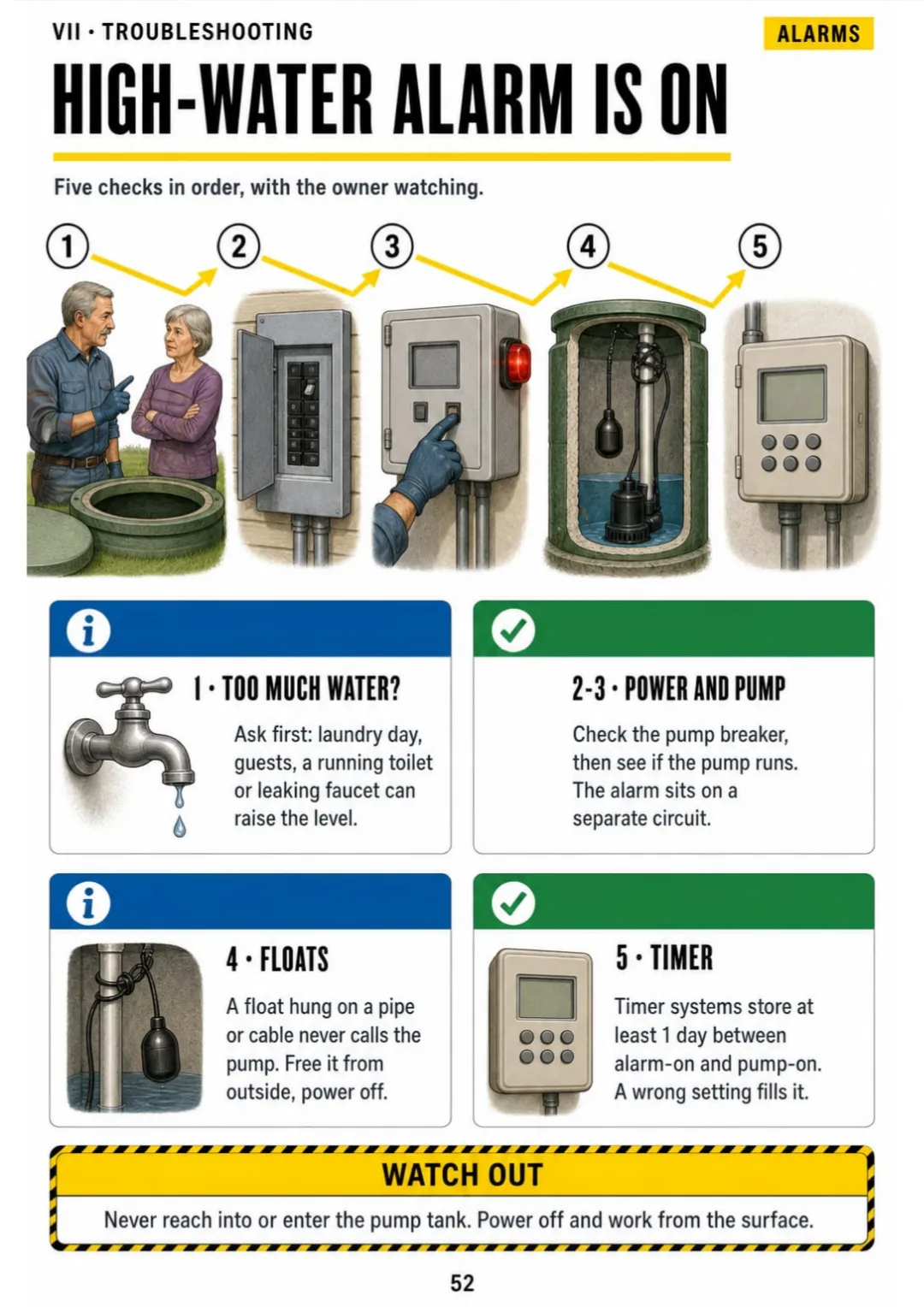
High-water alarm: water use → breaker → pump → floats → timer.
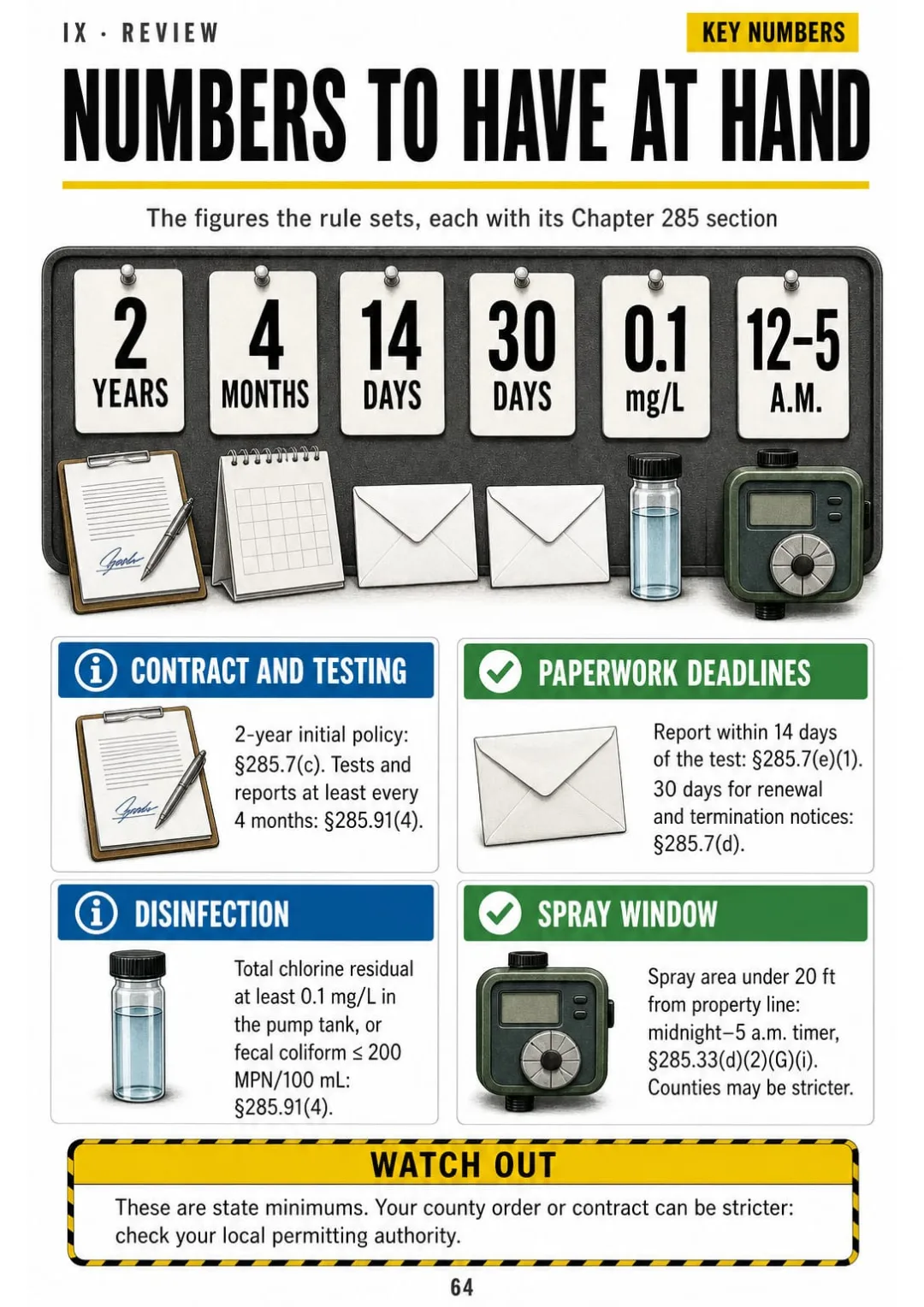
2 years · 4 months · 14 days · 30 days · 0.1 mg/L · midnight–5 a.m., with sections
10-step service visit strip, from the tag on the panel to the report

Swipe to see more →

These are real pages from the book. The table of contents is the full one: 9 parts and 64 topics.

The Problem Isn't You. It's How It Was Explained to You.

You're standing at the chlorinator with an empty tube, and the homeowner holds up a bucket from the garage: “Can't you just use my pool tablets?”

You know you read about it. But in the course manual it's a paragraph on calcium hypochlorite, labels and approved products, stuck between two other paragraphs. Nothing on that page shows you which tablet goes in the tube.

Liquid: feed rate and reservoir. UV: lamp and clean sleeve. Listed devices since 2016.

In the book it's one page: the wastewater tablet drawn on one side, labeled calcium hypochlorite for wastewater, and the trichlor pool tablet on the other, crossed out. You see the difference before you read a word.

Same with the pump tank floats, the spray setbacks, the high-water alarm and the service report: each one has its own page.

So you give the homeowner a straight answer, load the right tablets and close the lid. No digging through the manual in the truck.

COMPARE FOR YOURSELF

Same Topic, Two Ways to Study It

THIS
  • The manual: line after line after line
  • Floats and alarms explained only in words
  • You walk into the exam with doubts
The pump tank shall be equipped with float switches positioned at distinct elevations within the tank. The lowest float, designated the pump-off float, deactivates the effluent pump in order to prevent operation below the minimum liquid level, while the pump-on float initiates a dosing cycle once the liquid reaches the designed elevation. The high-water alarm float shall activate both audible and visual alarm devices. Where timer-controlled dosing is employed, the pump tank shall provide storage capacity equivalent to not less than one day of design flow.
FOR THIS
  • The pump tank in one drawing
  • The float levels in a box
  • The alarm float on top, wired to a light and a buzzer
Pump off, pump on, alarm: timer systems need at least 1 day of storage
CONTENTS

Take a Look at the 9 Parts and 64 Topics

The license and the rule, the aerobic unit as one path, how treatment works, disinfection, spray and drip dispersal, the 10-step service visit, troubleshooting, safety on the job and exam review: 68 pages, all illustrated.

IThe License and the Rule · pp. 5-10
  1. Who Licenses You: TCEQ and the Permitting Authority
  2. Maintenance Provider vs. Maintenance Technician vs. Installer
  3. Where Your Job Lives in 30 TAC Chapter 285
  4. The Maintenance Contract: The 2-Year Initial Policy, Then Yours
  5. Every Four Months: The Inspection Interval
  6. When a Contract Ends or Changes Hands
IIThe Aerobic Unit as One Path · pp. 11-19
  1. The Whole System in One Drawing
  2. Why Aerobic: Septic Tank vs. Aerobic Unit
  3. NSF/ANSI Standard 40: The Certification Behind the Unit
  4. The Trash Tank (Pretreatment Tank)
  5. The Aeration Chamber
  6. The Aerator: Compressor, Blower or Mechanical
  7. The Clarifier
  8. The Pump Tank and Its Floats
  9. Control Panel and Alarms
IIIHow the Treatment Works · pp. 20-25
  1. The Bacteria Need Three Things
  2. BOD and TSS: What 'Clean' Means on Paper
  3. Dissolved Oxygen in the Aeration Chamber
  4. The 30-Minute Settleability Test
  5. What Kills an Aerobic Unit
  6. Hydraulic Overload
IVDisinfection · pp. 26-31
  1. Why Spray Systems Must Be Disinfected
  2. The Tablet Chlorinator
  3. Wastewater Tablets, Never Pool Tablets
  4. Checking Chlorine Residual Step by Step
  5. Liquid Chlorinators and UV Units
  6. Empty Chlorinator, Stuck Tablets, Too Much Chlorine
VSpray and Drip Dispersal · pp. 32-39
  1. Surface Application: The Spray Field
  2. Spray Timing: Midnight to 5 a.m.
  3. Spray Heads and Pressure
  4. Setbacks Around the Spray Area
  5. Drip Irrigation Dispersal
  6. Drip Filters and Field Flushing
  7. Vacuum Breakers, Zone Valves and Pressure Checks
  8. Signs of a Dispersal Field in Trouble
VIThe Service Visit, Always in the Same Order · pp. 40-50
  1. The Visit in 10 Steps: The Overview
  2. Step 1: Arrive, Look and Listen
  3. Step 2: Control Panel and Alarm Test
  4. Step 3: Aerator and Air Filter
  5. Step 4: Measuring Sludge and Scum
  6. Step 5: Aeration Chamber and Clarifier Check
  7. Step 6: Pump Tank, Pump and Floats
  8. Step 7: Disinfection Check and Refill
  9. Step 8: Walk the Spray or Drip Field
  10. Step 9: Close Up and Talk to the Owner
  11. Step 10: The Service Report
VIITroubleshooting: Symptom → Cause → Fix · pp. 51-59
  1. How to Troubleshoot Without Guessing
  2. High-Water Alarm Is On
  3. Aerator Alarm or No Bubbles
  4. Sewage Odor in the Yard
  5. Cloudy Effluent or Solids in the Pump Tank
  6. Foam in the Aeration Chamber
  7. Spray Heads Not Popping Up or Spraying Weak
  8. Drip Zone Not Taking Water
  9. Ponding, Runoff and Wet Spots
VIIISafety on the Job · pp. 60-62
  1. Never Enter a Tank
  2. Electrical Safety at the Panel
  3. Lids, Germs and Personal Protection
IXReview and Exam Prep · pp. 63-68
  1. The Whole Path in One Page
  2. Numbers to Have at Hand
  3. The 10-Step Visit at a Glance
  4. Licenses, Contracts and Reports: Quick Review
  5. Common Mix-Ups on the Exam
  6. Your Study Plan Before Exam Day

One Page, One Topic, All Clear

Think of it this way:

It's a service call in July. The high-water alarm is on, the panel is buzzing and the homeowner wants to know what's wrong. You need the right order, not a guess.

In the book, you open the high-water alarm page and see it drawn: water use, breaker, pump, floats, timer, one arrow after the other. The order is right there on the page.

Step 10: report to the owner and the permitting authority within 14 days of the test.

Same with the clarifier, the chlorine residual check, measuring sludge and scum, the spray heads and the service report: each one on its own page.

Aerobic Septic Maintenance Illustrated is 9 parts and 64 topics, all drawn, and it ends with the key numbers on one page, the 10-step visit at a glance and a study plan for exam day.

What you see drawn, you don't have to memorize.

What's Inside Aerobic Septic Maintenance Illustrated:

Ipp. 5-10

The License and the Rule

Know exactly what your license covers: who licenses you, provider vs. technician vs. installer, where your job sits in Chapter 285, the maintenance contract, the inspection interval and what happens when a contract ends.

IIpp. 11-19

The Aerobic Unit as One Path

The whole system in one drawing, septic tank vs. aerobic unit, NSF/ANSI Standard 40, trash tank, aeration chamber, aerator, clarifier, pump tank and floats, control panel and alarms.

IIIpp. 20-25

How the Treatment Works

What the bacteria need, BOD and TSS, dissolved oxygen, the 30-minute settleability test, what kills an aerobic unit and hydraulic overload.

IVpp. 26-31

Disinfection

Why spray systems are disinfected, tablet chlorinators, wastewater vs. pool tablets, the chlorine residual Chapter 285 requires and where you take the sample, the test step by step, liquid chlorinators, UV and common chlorinator problems.

Vpp. 32-39

Spray and Drip Dispersal

The spray field, spray timing, heads and pressure, setbacks, drip dispersal, filters and flushing, valves and pressure checks, and signs of a field in trouble.

VIpp. 40-50

The Service Visit, Always in the Same Order

No more skipped checks: the service visit in 10 steps, always in the same order, from arriving and listening to the panel to the aerator, sludge and scum, pump tank, disinfection, field walk and the service report.

VIIpp. 51-59

Troubleshooting: Symptom → Cause → Fix

How to troubleshoot without guessing: high-water alarm, aerator alarm, odors, cloudy effluent, foam, weak spray heads, drip zones and wet spots, each from symptom to cause to fix.

VIIIpp. 60-62

Safety on the Job

Why you never enter a tank, basic electrical safety at the panel, lids, germs and personal protection.

IXpp. 63-68

Review and Exam Prep

The whole path on one page, the numbers to have at hand, the 10-step visit at a glance, licenses and reports, common exam mix-ups and your study plan.

At the end of the book: Key numbers on one page, the 10-step visit at a glance and a study plan for exam day.

Plus: 2 Free Books

OSSF Maintenance Provider Practice Questions

BONUS 1: «OSSF Maintenance Provider Practice Questions»

Value on its own: US$ 17.90

Exam-style questions with the answer explained and the page to review, so you find out what you don't know yet before exam day.

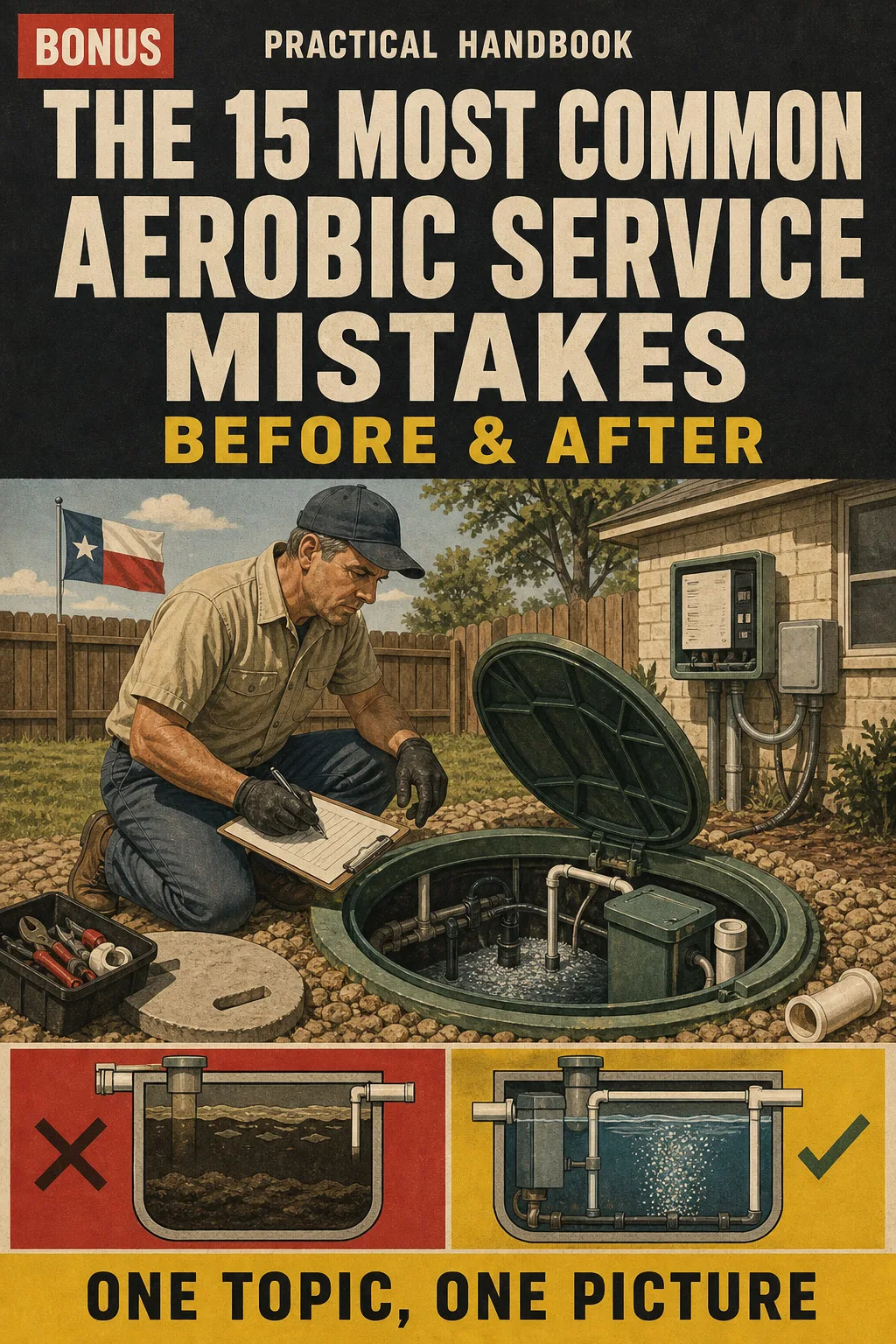
The 15 Most Common Aerobic Service Mistakes: Before & After

BONUS 2: «The 15 Most Common Aerobic Service Mistakes: Before & After»

Value on its own: US$ 14.90

Each frequent mistake drawn next to the right way, from a skipped sludge check to an empty chlorinator, so you can review it all at a glance.

Aerobic Septic Maintenance Illustrated with 2 Free Books

  • Aerobic Septic Maintenance Illustrated: 68 illustrated pagesUS$ 63
  • BONUS 1: OSSF Maintenance Provider Practice QuestionsUS$ 17.90
  • BONUS 2: The 15 Most Common Aerobic Service Mistakes: Before & AfterUS$ 14.90
  • High-resolution PDF to printIncluded
Total value US$ 95.80
YOUR PRICE:
US$ 27
You save US$ 68.80
YES, I WANT AEROBIC SEPTIC MAINTENANCE ILLUSTRATED FOR US$ 27

📄 This is a digital PDF book sent to your email: nothing is printed or shipped.

Secure purchaseEncrypted payment30-day guarantee

PDF by email: We email you Aerobic Septic Maintenance Illustrated as a PDF, together with the two free books. It's a single payment: no installments, no extra charges.

Who This Book Is For

You're taking the maintenance provider course

You're taking the maintenance provider course

Every topic of the course has its own drawn page, so what you hear in class has a picture to land on.

Your exam date is coming up

Your exam date is coming up

The review part puts the key numbers, the 10-step visit and the common mix-ups on a few pages you can go over the night before.

You already service aerobic units

You already service aerobic units

Print the visit steps and the troubleshooting pages and keep them in the truck, so you work in the same order every time.

Everything You Get Today

US$ 95.80US$ 27
YES, I WANT AEROBIC SEPTIC MAINTENANCE ILLUSTRATED FOR US$ 27

📄 This is a digital PDF book sent to your email: nothing is printed or shipped.

30DAYS
GUARANTEE

30-Day Guarantee

Try Aerobic Septic Maintenance Illustrated for 30 days, bonus books included.

We refund everything if the file won't open, if the book isn't what you see here, if you were charged twice or if the email doesn't arrive. Just email us.

You pay once. No subscriptions.

Frequently Asked Questions

Is it for me if I've been working on septic systems for years?

Yes. It skips the basics you already know and goes straight to what the Texas exam and the service visit ask of you: the rule, the numbers, the 10 visit steps and troubleshooting in order, each one drawn on its own page. It works for review as much as for first-time study.

Where does the content come from?

It's written for Texas, not a generic septic book. Every number (setbacks, inspection interval, chlorine residual, storage) is checked against the Texas Commission on Environmental Quality rules: 30 TAC Chapter 285 (On-Site Sewage Facilities) and 30 TAC Chapter 30 (Occupational Licenses and Registrations). Each number page names the section it comes from, so you can check it against the current text on the TCEQ site if the rule changes.

Is it official material?

No. It's an independent illustrated study book. It isn't published, approved or endorsed by the TCEQ or any training provider.

Does it replace the required course?

No. To get licensed you still take the required training, pass the exam and follow your permitting authority. The book doesn't give a certificate or continuing education hours: it helps you study and review what you learn in the course.

Are the practice questions the ones on the exam?

No. They're written for this book to help you check what you know. They aren't official exam questions.

When and how do I get it?

As a PDF by email, at the address you enter at checkout. The 2 bonus books come the same way. It's a one-time payment, with no subscription.

Is it only for Texas?

The rules, license and setbacks are Texas: TCEQ and 30 TAC Chapter 285. How an aerobic unit works and how to service it apply anywhere, but if you're licensed in another state, check your state's rule for numbers and paperwork.

Can I have it on paper?

Yes. It's a PDF you can print at home or at a print shop and keep in the truck.

How does the refund work?

You have 30 days. We refund everything if the file won't open, if the book isn't what you see on this page, if you were charged twice or if the email doesn't arrive: just email us.

Before You Close This Page

No more rereading the rule with nothing sticking.

The pump tank floats: you see them drawn, and that's it.

You walk into the exam knowing where everything is.

Drawings make studying faster.

The book is right below.

One-time payment: US$ 27 · Guarantee: 30 days · PDF by email

YES, I WANT AEROBIC SEPTIC MAINTENANCE ILLUSTRATED FOR US$ 27

📄 This is a digital PDF book sent to your email: nothing is printed or shipped.